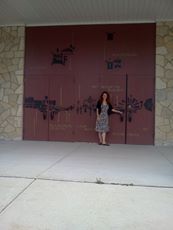
Saturday, September 14, 2013

The Evangelical Counsel of Obedience, for Laity

And here we are at the last of the three evangelical counsels, obedience, and what I have learned about it.

I am very aware that my thoughts often feel backwards to me when I compare myself with the standard line -- about anything, really. What I mean is that if myself and 99 other people played word association, I might be with only one or two other people in relating what seems like an obvious connection between concept A and concept B. That's just how my brain works. And of course, my observations are always rooted in my own unique history.

My own unique history when it comes to obedience is that my heart has been searching all my life for someone who can explain life to me, and by that I mean how to live it. I told this story awhile back about the woman who identified that I had "such a submissive spirit." I wrote that six years ago, and I still have no concept at all how to explain what happened there, but I will tell you it is true. There is something in me that has always longed to find a suitable home for that submissive spirit of mine. And my search has taught me something.

You might think that a submissive spirit would bow down readily before anyone willing to dominate it. But in truth, a submissive spirit recognizes quickly the incapacity for authority that is inherent in domination. Did I just lose you with those statements? Maybe I'd better back up and define my terms.

I am defining "submissive" here as one who wants to say Yes, loudly, strongly, boldly, to what is right, true and good. That means to assent, to believe, but also to act. To want those things. I have always wanted these things. My difficulty came in despairing of ever finding them, especially because I realized that the Right, the True, and the Good are not doctrines you can believe, but a way you live. It seems that for  years, all I found was the compromised, the half truth, and the mediocre.

Domineering types seem to be strong, and seem to have something solid to say about what is right, true, and good, but there's always a sort of red flag, an invisible, spiritual one, that I see flying around them, and as courage allows, I have rejected what they say, even while being drawn to how they say it (namely, with strength). There's always something in a domineering, authoritative person that demands a surrender of one's personal freedom to them. And why would I want to give my personal freedom to another person who is just like me?

And I think that a lot of people figure that when you talk about obedience to the Church, or in the Church, it can only mean that kind of being dominated.

But if you accept that there is a God, then there is another option.

That option would be a submission, an obedience to Being who is not just like me, which gives the deepest freedom humanly possible.

And that option is what my soul has been searching for all my life.

Here's what the OCDS Constitutions have to say about obedience:

The promise of obedience is a pledge to live open to the will of God, “in whom we live and move and have our being” (Ac 17:28) imitating Christ who accepted the Father’s will and was “obedient unto death, death on a cross” (Ph 2:8). The promise of obedience is an exercise of faith leading to the search for God’s will in the events and challenges in society and our own personal life. For this reason the Secular Carmelite freely cooperates with those who have responsibility for guiding the community and the Order in discerning and accepting God’s ways: the Community’s Council, the Provincial and the General.
To me it is a mistake, and a big one, to think of obedience as looking to a legitimate authority, even to God, for a set of parameters inside which I will carefully stay. It is not, of course, that I am looking to break through boundaries reason sets in place. That would be, well, unreasonable! But I prefer to think of obedience as the open sky, into which I am committed to fly on the wings God has granted me. God has desires that are as infinite as His love, and how deep and broad and wide His desires for me must be. What dreams and plans He must treasure as He looks at my life with its potential. Obedience is to say yes to God's will, His desires, His dreams for me, and through me for this world. It is to fly with all the strength I can muster. It is to delve into His Word, to know His will, to embrace it with all I am, and live it with my full passion, in the concrete reality before me daily.

His will for me is love and mercy itself. To submit to His will is to unite myself with His love and mercy, thereby becoming my free and genuine self.  God alone is big enough for me to give myself to in this way.

Sunday, September 08, 2013

The Evangelical Counsel of Chastity, for Laity

Chastity is the love of God flowing through me, in my relationship to another human being. Chastity is the love of God flowing freely, overcoming obstacles, blockages and impediments of fear, pride and selfishness. Chastity is dynamic; it is meant to be grown with, and grown into. There is a drawing element of this dynamic, because relationships between people are the normative means by which God draws the Church together to thrive and grow. Chastity is directly linked to death, that is, the gospel death to self that leads to the fullest life possible, for ourselves, and for all.

This is what God has been teaching me for the last several years.

And learning it has been very interesting to say the least.


Chastity is not about a list of sexual don'ts. Moral law, and simply reason, tell us that. Our culture has lost a sense of that, and I think it is one of the effects of losing our reason that we have to talk about matters we can arrive at by reason and make religious talk out of it. (I wrote a post about that called Natural Law, Marriage, and the Normality of Ignorance.)

Note, of course, that chastity and celibacy are not synonymous. 

Chastity is a positive thing; it is about what we do. There is a sexual dimension to chastity, because being male or female impacts everything we are and do and all of our relationships. Chastity is simply relating with other people with the full extent of who we are.

Here's what the Secular Carmelite Constitutions have to say about chastity:

The promise of chastity reinforces the commitment to love God above all else, and to love others with the love God has for them. In this promise the Secular Carmelite seeks the freedom to love God and neighbour unselfishly giving witness to the divine intimacy promised by the beatitude “blessed are the pure of heart for they shall see God” (Mt 5:8). The promise of chastity is a commitment to Christian love in its personal and social dimensions in order to create authentic community in the world. By this promise the Secular Carmelite also expresses the conscious desire to respect each person as required by God’s law and one’s state of life, as a single person or married or widowed. This promise does not prevent a change in state of life.

The truth of this has been quite an ordeal for me to learn. Chastity has by no means come naturally to me. And I don't mean that I have had a particularly sordid past. In fact, considering the weird men I've known, my guardian angel must have some incredible muscle. Chastity has come hard for me because of being wounded with the loss of significant relationships at a young age. To prevent more hurt, I locked myself away. The only thing that flowed out of me was my hurt. The love God had made available to me in my baptism, I let sit. I clung tight to fear, to pride, to selfishness.

And I've written a lot about all those stories in this blog in the past. Here I want to write about what I've learned about chastity.

The beginning for me was realizing that I should not have to "pay a price" to gain friends. In other words, I realized purposefully being a fake to feel like I was fitting in or gaining a desired person's approval, was bad. The love of God is not flowing freely from one who is stifling or sacrificing one's soul to be liked.

I learned that the only way to learn to love other people is to trust deeply in God. To be open to give love means to be open to all manner of hurt from others, and of seeing my own limitations and sin. The way that none of this is devastating is to trust that God is Love. He is the cause of the love that flows through us, and His love is more powerful, more abundant than hurt or sin. Because I have so misunderstood God's love at times and have been so unwilling to feel the pain associated with it, I have begged God to take a spiritual power-washer and blast it out of me. But, no, He didn't. Instead He showed me that this love is my salvation, even when it hurts. Knowing that it hurts to love means getting a peak into understanding God's heart, who loves us with unimaginable passion, and who waits, longing for hearts who forget Him.

I have learned, too, that chaste love flowing through us reminds us of death. God's love shared, especially reciprocated, creates a bond. Bonds are what make us cry at funerals, or when friends leave, or when sickness slowly carries one away. Sometimes when I open my heart to another, I am very aware that in so doing I am creating another bucket of tears I will cry when we part. But that does not stop me. It can't -- not if this is how God builds His kingdom to which I have committed my life, and how we draws me and those other souls together into that kingdom where nothing is ever lost. This is the love that was manifest in Acts and in Paul's writings. Think of Acts chapter 20, where Paul is at Miletus telling the believers they won't ever see him again. It says: "They were all weeping loudly as they threw their arms around Paul and kissed him, for they were deeply distressed that he had said that they would never see his face again. Then they escorted him to the ship." This is kingdom-building chastity.


The evangelical counsels are all about pointing to heaven. Chastity sure does it for me. There really is no reason for love to exist if there is no God, and I know the only way I could have learned to love anyone is by supernatural intervention. I also know that no love born of God ends here on earth.

Thursday, September 05, 2013

The Evangelical Counsel of Poverty, for Laity

As I mentioned in my post-of-intention, I have been contemplating what living the evangelical counsels actually entails for a lay person. No, not really "for a lay person," but for me. I've been mulling over what the Lord has been teaching me about poverty, chastity, and obedience. Of course, He seems to teach me most things without my realizing what it is about until much later when I get a word to package the lesson in, and I say .... (guess what).... naru hodo!

And then I often find much later, when I am in a more practical stage of life where I am actually required to make choices and decisions based on the lessons I have been taught, that I read something I wrote, and I suddenly realize it was meant to be carried out very concretely, not just in the realm of "having wisdom." Sometimes that's a bit of a bummer... But it is then valuable to realize that pretty words have all their value in being applied.

So, yeah, that's my warm up for why I'm writing this.


Here's what the OCDS Constitutions have to say about poverty:

By the promise of poverty the Secular Carmelite expresses the desire to live in accordance with the Gospel and its values. In evangelical poverty there is a wealth of generosity, self-denial, and interior liberty and a dependence on Him who “Though rich, yet for our sake, became poor” (2 Co 8:9), and who “emptied Himself” (Ph 2:7), to be at the service of His brothers and sisters. The promise of poverty seeks an evangelical use of the goods of this world and of personal talents, as well as the exercise of personal responsibilities in society, in family, and work, confidently placing all in the hands of God. It also implies a commitment to the cause of justice so that the world itself responds to God’s plan. In combination with these, evangelical poverty recognizes personal limitations and surrenders them to God with confidence in His goodness and fidelity.
Now, here's what I have been learning.

I've always had a thin line to walk about this business of denying oneself, and of poverty of spirit. I think that is because to counter each of the evangelical counsels, the devil throws out a different pack a lies to distort God's image and make Him look hateful. By desiring us to have poverty of spirit God is not communicating You are nothing, but rather You are mine. And that is not in some violently possessive way. In being God's, we are made completely free -- not possessed by things or goods.

One of my biggest struggles has been poverty in my thinking. I can remember right where I was sitting when the Lord impressed on me that I had a big need to meditate more on Scripture. Actually, that message came through to me more than once. At first I tried just randomly reading a book of Scripture, but soon drifted away from that. Slowly I moved back towards praying the Liturgy of the Hours, which I've done in fits and starts since the day I decided to become a Catholic. I discovered that the more I did that, the more my meditation started picking up steam. Now I simply can't believe how beautiful and packed with meaning it is (because I remember how boring it felt when I first started).

But my point is there that it is very natural for me to ruminate and reason and just sit and think (sometimes quite unreasonably!). Poverty of spirit in terms of thinking, for me means allowing the Word of God to so fill my mind that when I ponder a situation or person or event, I can let Him infill my own thoughts, rather than being carried away simply by my inclinations, my reactions, my emotions, my mood, or the state of my indigestion.

And so with any good or gift that comes to me. I can receive it, not accepting lies about it or worrying or getting defensive over attacks on the said good, but I hold it in an open hand, offering it. I place it entirely in the presence/at the disposal of God. If I have it, that's good. If I don't have it, that's good too. It is my place to make anything I am or have available to God. It is God's action to create the dynamic that makes for poverty of spirit. He will wedge one into the place where one's offering turns into a sacrifice.

For me this has happened when I have been in the midst of change I completely did not understand. My own thoughts turning over events only found pain. In those moments, turning to Scripture to delve into God's thoughts, to repeat His promises, His commands, the history of how He interacted with His people -- all this sunk down into the crevasses formed by my own soul splitting open. In this way, God was able to float out more things in me that bore no resemblance to Him. It stung, like death always does. Sometimes we really do prefer the general anesthesia of our dullness to either real life or real death. But along with that sting of death, one finds oneself looking into the face of the Savior, the Redeemer, the One with all the power, the One who speaks those powerful words that seem at the time to only have terrible power. We know that He holds in His hands all that we lack. And we only feel that lack. But we know that as long as we are with Him, He has all we need. If we trust, we know that at the right time it will be ours.

That is the blessed state of poverty: feeling our lack keenly, but knowing we are with the One who holds all we need. This is the state of the anawim, or Mary who rejoices in God her Savior who has done to her great things. Poor, yet possessing everything, because He is Everything.

Monday, September 02, 2013

Eventually, I Will Write About....

It seems that blogging has been happening only in my mind, lately. Between the new intensity of the school year starting (yeah, I've succumbed to the regular old notion of a school year) and limited quiet time to think with a keyboard at my fingers, I just haven't gotten to type much of anything.

However, I do have a writing intention.

Even though I am not far enough along in my Carmelite formation to be preparing for taking the promises, due to being in two different formation sessions I have been somewhat prematurely reading the Constitutions (which I will only officially receive late next month). In these Constitutions is discussion of the evangelical counsels of poverty, chastity, and obedience. As I meditate on these I am quite blown away to realize that in the midst of what sometimes just looked like a horrendous mess of a life, God has actually been teaching me, coaching me, preparing me, to understand and live these. As a lay person, of course.

It just seems that there isn't a great deal of discussion of what these counsels look like for anyone but nuns, sisters, friars and priests. What about a married laywoman?

So my plan is to bat around what God has been teaching me, to try to wrestle it into words.


Wednesday, August 21, 2013

Hi. Let Me Re-Write Your Homily (again)

So, today's gospel was the one about the man who hired the guys standing around in the market place all at different times of the day, but paid each one the "regular daily wage." And the homily was basically: God is generous, and we don't get judged on a bell curve.

The second point was what really struck me as I listened to the gospel, but like always, what I drew from it was almost the opposite from what was preached. It was "You aren't John Paul II, and you aren't Mother Theresa. They had their lives and their circumstances, and you have yours. We aren't expected to be them. Just be the best you you can be."

And that's right and good. Just too conciliatory for my need today.

But what I really needed to hear was "You see Joe Schmoe over there, or Jane Schmane. Who cares about what they are doing. You might compare yourself to them and say 'Heck, I'm doing as well as they are. Everything's fine. We're all happy and comfy together, and after all, we're not perfect.' But no. God has given you gifts, and you are the only you He has made. You have an obligation to fulfill what God has given you to do, and you are never going to realize what that is by looking around at everyone else. Don't give one thought to how you compare to others, or get comfy because you feel like you fit and look like those around you. Maybe I want you to be the only orange crayon in your bin. You'll never understand how to be a perfect orange if all you look at is yellow and green."

Come to think of it, I've written a bunch of songs with this exact theme.

For some reason I crave hearing an exhortation to courage. Perhaps I want preachers to realize how much this moment in human history calls for it. Or, as St. Teresa of Avila says, how much courage it takes to pursue holiness, at any point in history.

Monday, August 19, 2013

Christianity: Just Do It

I am so exhausted right now, but sometimes I do my best writing when my brain can't rethink things a thousand times.

Which is just the sort of thing on my mind right now.

I recall clearly being a 14-year-old Lutheran. I had been confirmed, which meant I was now an adult member of the church, and in the process of being confirmed I had studied and learned all of Luther's Small Catechism, and memorized big chunks of Scripture, too. I had started Lutheran high school, where I memorized more chunks of Scripture and was busy studying the Old Testament. I had this terrible feeling that I had learned everything there was to know about God.

Now, of course, that was silly. And yet as I went on through high school I easily earned As (and even A+s) in religion class as I slammed down hundreds of memory verses and remembered obscure details from the gospels and Paul's epistles for the pop quizzes we had. I even impressed my teacher with doctrinal debates in the 11th grade class that was the reason I had wanted to go to that Lutheran school in the first place. (Well, besides that boy I had a crush on...) Even in college Religion classes (for some reason, Lutherans have a bugaboo about using the term theology) it seemed that I was never to really rise to any level of significant intellectual challenge. It was terribly frustrating.

There was one thing that niggled at me from Scripture, and that was this idea -- get that, it certainly was an idea to me at the time -- that Christianity was supposed to be experiential. Even back in my confirmation days, I had this sense that I wanted to find someone who could teach me not that what, but the how of Christianity.

My trek through the charismatic movement awakened me to experiencing God, and my introduction to Catholicism made me realize that the mind truly could be satisfied with something significant to chew on that was consistent, coherent, beautiful and true.

But there's been a certain poison that has stayed with me from my very early Christian days that always whispered that learning more about God was an intellectual pursuit.

Now, as a graduate theology student I came to see that obscure points of theology, like the precise definition of the perpetual virginity of Mary, do actually speak significantly to our lived experience. I could always intuit that kind of thing. But I also know that intellectual types have a way-over-fondness for debating fine points in such a way that makes almost everyone else stand on the outside either feeling stupid and inferior, or being put right off this whole faith in God business in the first place.

And that was me. I was "tight with God" and everyone else was stupid, or without knowing it I was poisoning their hearts against God.

Except I wasn't tight with God at all. I was tight with my love of intellectual pursuit.

There's nothing inherently wrong with being an intellectual, except that pride seems much easier to come by the smarter one is. And no one can really like a proud person, because no one is allowed access. So you also get lonely. Which you tend to hide with more pride until you can't stand it anymore.

But here's the thing that finally makes all the sense in the world: the real way we "learn" about God is not in our heads but in our lives. In experiences. In encountering Him, when He breaks through that pride and our loneliness. It is the how of living with God, and it was so important to Him that we know it that He sent His Son Jesus to walk this earth, to live, to share life with others, to suffer in the mundane, and to make of Himself a holocaust.

I had a list of theological reasons as a Lutheran why living like Jesus did was not important, not necessary, not possible, not advisable. But then there's that pesky 1 John 2:6, "Whoever claims to live in God must live as Jesus lived." This has nothing to do with earning God's favor. We have God's favor, whether we are able to accept that or not. But the point is that when we encounter God, He wants to mess with our lives. He wants to say "Watch me. I'm going to show you what to do -- and how." He is after our hearts, which is where our choices and our actions start. I always had this sense as a pre-Catholic that real Catholics had this aura about them of doing habitual good. To this day I can catch a glimpse in some people, sort of like a waft of perfume going past me, of this goodness, this imitation of Christ, this reality of Christ living through them.

Real Christianity is lived. It is a response, with one's life, to the God who comes to one.

Intellectual formation is good to the extent that it helps us live holier lives. If it makes you an obnoxious, arrogant so-and-so, it is far better to put the books away and wash feet for awhile.

Monday, August 12, 2013

Pondering God's Dark Speech

I have had one humdinger of a weekend, just by way of having a lot of activity and people going on around me. But in the midst of all that there was a completely different something going on spiritually, and maybe because of the hubbub on the one hand I need to go back and capture it again and put it down in words so that I don't lose it.

It seems God has a way of using "dark speech" at times. You know how when you are in conversation with someone, it might take them 10 or 15 seconds to complete a sentence? For those seconds, your brain is simply processing what is being said to you. The time is too short to ever feel it, but eight seconds into the sentence, you might not realize what the person is trying to say yet. Well it seems to me that in conversation with God, He can sometimes take about a year to get through a sentence. And during that time, all I can do is realize that He is saying something, without being able to grasp the entirety of His message just yet. I suppose that really indicates that the relationship of listening to Him has a priority, at that point, over even what it is He is saying. It keeps one stretching forward, straining a bit to make sure every word is captured. In experience, what I'm hearing seems to have all the value, but all of a sudden I see that the act of trying to listen is an exercise.

I am an auditory person. Being able to hear things is crucial to me. Huh. Ok. I see that God knows exactly how to draw each of us to Himself. It is crucial to me to "hear" what God is saying to me, so He takes His sweet and sometimes weird time so I am thoroughly focused on that, to strengthen my relationship with Him.

(This is why I have to go back and think this stuff through....)

The first experience of this dark speech, this intense moment of an invisible finger pointing furiously at a piece of God's normal liturgical speech, was last Friday on the feast of St. Teresa Benedicta of the Cross (aka Edith Stein), a Carmelite saint. I don't have the nifty supplement to the Liturgy of the Hours for Carmelite saints, so I was praying the Office of Readings from the Common of One Martyr. Now, there is a way that this seems to work. Praying the Scriptures normally connects us with God in His action throughout salvation history (because God never speaks in a vacuum, always to people in a context). So, in entering into this dark speech, I am already present to this God of history in this normal kind of way, and I find to some degree or another, my personal place in this greater scope of salvation history. I am part of the People of God, and I'm seeing that fact. But then I read something, usually something that bears witness to God's presence in their own life (whether St. Paul or an apostle, or the spiritual writer or saint featured in the Office of Readings), and there is this resonance, a sense, and usually specific words that have a specific meaning in my own history. It's like the proverbial "flashing neon light" that a visual person might relate to. This time, it was St. Augustine's mention of a banquet: "You are seated at a great table. Observe carefully all that is set before you, for you also must prepare such a banquet." He wrote this in the context of talking about the martyr's total self-donation.

Now, I can't go saying everything that this provoked, but two of the many things that immediately came to mind (and yes, it is possible for many, many things to come to mind all at once -- it seems that is part of the experience) were told in this post and in this one. Both of these have to do with how the image of a banquet has been present in my faith journey, and they had to do with awakening to the sense of community.

Later at Mass, the dark speech continued as I heard the readings. What was impressed upon me, remembering that this was the feast of a Carmelite saint, was that part of what is drawing me into Carmel is the prayers of generations of Carmelites before me. Community. And now I am being called, not because I am so wonderful, but because I have a call to extend the same saving grace to others. I have always had the sense that all of God's action throughout my life has been in response to someone praying for me, some unknown someones. I actually had the sense that St. Teresa Benedicta's life and death itself was intercession for me. I don't know what emotional words to put to this, but it is a profound sense of a call on my life that is absolutely about self-giving -- which is of course the opposite of self-serving. Even though I realize I don't know the fullness of what this means, I still know it is very true that becoming a Carmelite is a responsibility I have to God, a call, a vocation. This is absolutely not about how well I "like" it or what kind of warm fuzzies I get. It is about what I am called to give, to God, to the Church, to the world.

Then there were the readings at Mass on Sunday. Often I read them beforehand, but this Sunday I did not. Again, I heard the Lord speaking, darkly, about my own life. This is much harder to put into words, but again these readings harkened back to another moment of "dark speech," or a sense I had from God at a Mass almost a year ago. I had the sense at that time that the Lord was warning me of a difficulty which would come (which indeed came that very day), but that I was to do nothing about it, only to wait for the Lord to bring the resolution. But I simply have not been sure how much stock to put in that sense. And mostly I haven't been sure because I've wanted to resolve it myself. Fact is, though, I haven't been able to. I've pretty well resigned myself to St. John of the Cross's counsel to forget all about it, because if God wants to act, He certainly will; it doesn't depend on "how much faith" I put in an uncertain sense of something He may or may not have been trying to promise me. In fact, to be honest, I hate getting these kinds of "senses" precisely because I don't want to have my life hang on waiting for something to happen. I know from experience that it takes my expectation off of God.

But listening to those readings, I felt myself slowly peeled, until the gospel just about split me open. I felt the Lord saying that He had seen how I had responded, the good and the bad, that He had seen my faith and received my sacrifices, and now He was telling me to be prepared. We had the longer version of the gospel, and line and after line after line pierced me -- not in a painful way, but in a penetrating way. Then came that last line: "Much will be required of the person entrusted with much, and still more will be demanded of the person entrusted with more.” Again, that sense that God is extending to me a call and I am to be sober-minded and realize this is about what I am called to give. This is not about my entertainment or titillation or some kind of fun kick. In other words, we're not talking superficialities here, we're talking real giving and real joy.

In the next few weeks I need to write my letter of intent for taking the next step to receive my scapular as a secular Carmelite. I'm sure I'm not too far off to say that this is entailed in all this, but I also know the Lord speaks in many layers, and always very personally, and there is always an element of surprise that only makes sense in looking back over life, sometimes years or decades later, and it shows that God knows us far better than we know ourselves, and that there is nothing random about or accidental in our lives. He does these things with us because it is one way at least that He builds our loving, learning and trusting relationship with Him as a Master with His disciples.

Thank you Lord, for the grace of writing, and thank you especially for calling me. I renew again the fact that I make my life a signed blank check in your hands. Please help me to move with you to and through everything that you desire. My one request of you is that you would enable me not to be a disappointment to you.

Wednesday, August 07, 2013

How to Kill Fleas

I rarely post anything on this blog that is purely practical, because I figure that's what everyone else's blog is for. But when I discover something that works and solves a problem, how can I not share.

We have three cats. These three cats have fleas. When these three cats have fleas, the humans in the house share in the flea action. And we dislike it greatly.

Nothing from the pet store or the vet seems to work very well at killing or preventing the fleas on the cats. We've tried the expensive brands, flea collars and a product made with essential oils, and the fleas have persisted.

Bathing the cats with dish soap followed by meticulous combing actually did kill off quiet a few fleas, but it increased the level of paranoia significantly in the cats.

I read the completely uncomforting statistic somewhere that if you find one flea on your cat, you probably have thirty living elsewhere in your house. Great. So I reasoned that the most pressing need was get eliminate the fleas from those other places in the house, where the cats frequented before they blessedly became so fond of our porches and backyard that they hardly ever come in any more.

Everyone's going to sell you some product to kill fleas, but what worked very well for us is something that won't cost you much of anything.

Take the reading lamp you have, the one with the bendy neck. Plug it in somewhere near where you find yourself getting bitten a lot. Aim it down to the floor, and place below it a shallow pan (11x17x1 baking sheet, for example, or a pie pan, or a 9" cake pan, etc.) filled with water and just a drop of dish soap. Leave the light on, especially at night, with no other lights on around it.

In a day or two, you will have a tidy collection of dead heat-seeking fleas. Yes, it is a gross sight to behold, but I consider that every dead flea is one that is not jumping onto my ankle for a snack. And of course you can dump and refill and count the dead as often as you like, to track how the population is dwindling.

Simple, cheap, and effective.

You are welcome.

The only downside is that today I am getting ready to make my son's birthday cake, and I realize that the pan I need is the flea trap in his room. I'm hoping maybe he won't notice.


P.S. If you've already been bitten, the best thing I've found to stop the scratching is Purification oil from Young Living.

Monday, August 05, 2013

Learning from Jesus' Grief

Check out today's gospel for a minute:

When Jesus heard of the death of John the Baptist,
he withdrew in a boat to a deserted place by himself.
The crowds heard of this and followed him on foot from their towns.
When he disembarked and saw the vast crowd,
his heart was moved with pity for them, and he cured their sick.
When it was evening, the disciples approached him and said,
“This is a deserted place and it is already late;
dismiss the crowds so that they can go to the villages
and buy food for themselves.”
He said to them, “There is no need for them to go away;
give them some food yourselves.”
But they said to him,
“Five loaves and two fish are all we have here.”
Then he said, “Bring them here to me,”
and he ordered the crowds to sit down on the grass.
Taking the five loaves and the two fish, and looking up to heaven,
he said the blessing, broke the loaves,
and gave them to the disciples,
who in turn gave them to the crowds.
They all ate and were satisfied,
and they picked up the fragments left over–
twelve wicker baskets full.
Those who ate were about five thousand men,
not counting women and children.  (Mt. 14:13-21)

Don't let that first sentence pass you by, because the Church scoops it into the context of this miracle, which in turn prefigures the institution of the Eucharist, and hence Calvary, the source and summit of all our life.

Jesus hears of the gross injustice which has been done to His cousin John, the prophet, whose head was "sheared off like a rabbit's and given as a present to a dancing girl," to quote Zeffirelli's Jesus of Nazareth. The news strikes Him, and He goes off by Himself.

What was He doing? Well, as the Church prays, Jesus is "like us in all things but sin." The news of the death of a holy man, a relative, a prophetic forerunner, certainly grieves Jesus. I think He goes off to process that grief, to pray, to be with His sense of being shaken. But I see something else in that besides an attempt to "get over it." He is also discerning a call, a signal from His Father.

John was to prepare the way, and suddenly He is gone. His work is done. Yes, there is a grief, but that grief is not without purpose and fruit for Jesus; it is to open up a new time, a new space in Jesus' heart.

He had His time of solitude on the boat. I wonder how long that would have been. Certainly not the months and months that I have needed after some "death of John the Baptist" type news! But right away when He steps out of that boat He sees needy people, and His heart is moved by them, and He responds to their needs with what He has, namely, power to heal. But He also responds with His power to form His disciples. He sees that the need is bigger than even what He personally can do, as one human. He sees that the disciples need to learn to cooperate in His miraculous power, and that even the companions and family members of those in the crowd who were particularly the suffering ones also need basic needs met.

This intrigues me. The loss of one person to whom Jesus was close certainly does not make Him cave in on Himself, nor does it put Him in this mode of focusing on one other individual. He is not trying to address His own human needs here. Apparently, He took care of that in His solitary boat ride and His communing with His Father.

No, instead He allows the pain to hollow out in Him a new womb of ministry. It is all laid out before Him. Now, He gives all to those He sees, He prepares His followers for their primary future ministry of feeding the multitudes with what He Himself provides, and He prefigures the handing over of His own body to death.

Lord, teach me to handle grief this way. Teach me how to be alone in that boat with you for as long as is necessary. But give me also the hope that a greater and deeper purpose lies ahead. And thank you, Lord, for my having been blessed to know John the Baptist in the first place.

Tuesday, July 30, 2013

What Happened at Holy Hill

It's time for another show-and-tell.

A week ago we visited the Basilica of National Shrine of Mary Help of Christians, which is otherwise known simply as Holy Hill. It is operated by Carmelite Friars whose monastery is located on the grounds.

View from the rear of the Basilica


It isn't so much the physical beauty of the place that stirs me, though it is nice. There is something very powerful that moves me when I am here, and even to an extent when I remember being here.

The first time I heard of this place was in a conversation with my friend Keith who had just returned to the Church, while I was still an anti-Catholic pentecostal. I had encountered one brief glimmer of light coming from the Catholic Church while I was in college, and that was in the writings of St. Teresa of Avila and St. John of the Cross. I remember then dropping whatever book I was reading onto the table in the library out of sheer awe and saying to God, "Lord, if there are any people left in the world who believe like this, those are the people I want to be among." Now, three years later, I was asking Keith in a dire attempt to be conciliatory to a man I was very fond of, "You know St. Teresa of Avila and St. John of the Cross? Are there any people like them around the Catholic Church these days?" I didn't even know what I was asking, I mean, I certainly didn't understand all about religious orders, nor did I understand that they were basically the founders of one, the Discalced Carmelites. And he told me yes there were, just in the next county north, at Holy Hill.

My Protestant friends took me there the first time, mostly for sightseeing, since in the fall everyone comes to see the beautiful leaves from atop the high church tower. But I returned many, many times. More often than not, my feeling there was one of desperate and tremulous quest. I knew and believed that the Church was God's profound beauty, but I also knew I was encountering other stuff, both in the Church and in myself, that was ugly. I was often confused and scared, and amidst these new and foreign surroundings I tried to beg God to show me what He was doing.

Holy Hill has a monthly healing Mass, and at one of these I took the offer to go in the prayer line afterwards. This felt comfortingly familiar to my pentecostal experience. And yet, I wasn't entirely sure if these women who were going to pray with me were trustworthy or not. I don't remember anything I said to them or what we prayed for, though I have a feeling I started to cry. But I do remember vividly what the one woman told me as I got ready to leave. She told me to go and pray to Jesus, and she asked me if I knew where to find Him. I blurted out, with a bit of a question mark in my voice, "In my heart?" And she smiled and said yes, in my heart.

I had no idea at the time what a Carmelite-flavored exchange that was. I don't know for  sure, but I have a feeling she was a member of the local OCDS community, just like the one I am in formation with.

Last week's trip might have been my 20th trip there. This time was different, because I'm actually an aspirant of the order. Secular Carmelites are not addenda to the "real" order. I am actually going to be part of the exact same order that St. John and St. Teresa were. To think -- God answered that extremely earnest cry of my 20-year-old heart that I didn't even understand at the time! 

During the whole visit last week, I was vibrating inside . It is hard to describe, but as I took the picture above I was thinking "I wish I could eat this place." It's that sort of experience of grace where you just want everything of you to be part of everything of it. This is Carmel. This isn't just my home, it is the room within my home where I encounter Jesus, where He encounters me. Where I am His and He is mine. 

If I had that same book from my college days in my hands now, I'd drop it in sheer awe again.


Side altars: St. Teresa and St. John


Our Lady of Mount Carmel

Main Altar

Monday, July 29, 2013

Where "Unleashed" Goes from Here

In 2011, I recorded a CD called Unleashed, and if you know me or follow this blog, you've heard something about that.

The whole process was a strange ride, a sort of biopsy out of my life, especially my interior, spiritual life (which has always had characteristics of a three-ring circus).

I had an urgent sense of a call to do the recording, a strong desire that flamed up, and a boatload of questions and worries that just dared me to wrestling matches. My interior questions were bad enough, but my biggest objective concern was, of course, the cost. Even with the reasonable studio I found, the budget for recording and duplicating was not going to be chump change I had lying around. I told the Lord one day that if He really wanted me to do this, He would have to provide the money. The following day I had an unexpected rebate check from Ford in the mail. It wasn't enough to cover costs, but it was significant enough to get my attention. I was assured that God knew what He was doing.

So I proceeded in faith.

My ducks began to line up, and I even began recording.

Two weeks after we began, my sister Bonnie died rather unexpectedly, although she had been suffering from cancer and complications for some time. Several weeks later it came as another surprise to me that an amount of money was coming my way from her. It was more than enough to cover all the expenses I eventually incurred with the CD.

After the CDs arrived (the official "release" date was the feast of Our Lady of Lourdes -- more on that in a bit), I had a little flurry of having friends buy them, selling them on-line, and happily celebrating what had been a significant stretching for me.

Not long after that, those of you who follow this blog might recall that I hit what I can only call a spiritual dark night, and among other things quite frankly I could not even listen to the CD for about a year, let alone think much about it.

But before all that happened, and while I was recording, I did invest a lot of prayer into this whole thing. The feast of Our Lady of Lourdes timing was significant to me, because it seemed that there was something about healing here. I prayed always for the conversion of those who would listen, and for their healing.

Also, during this "dark night" time, I began to be convinced and convicted that selling these CDs was not to be primarily how I would go about getting them where they needed to be. It became clearer to me that Bonnie's death and the money that funded the recording was by no means incidental. My sister, who was mentally ill for most of her adult life, was well known for being generous even to a fault, and gathering up things only to give them away. I became more convinced that I should give the CDs to anyone who wanted them.

Recently I began to see that the time has come for me to take a fresh look at this whole journey, and to ask the Lord again what He wants. It is no great burden to me to have these CDs in my house, but I realize if the Lord wanted me to do the project and give them away, then they do not belong to me and I need to find where they do belong. In praying and discerning and talking with people, I have decided to offer these free of charge to hospices, to those who work with the mentally ill, with grieving families, to those suffering illnesses, to religious orders who minister to those who so suffer, to those who use recorded music in therapy. And really, to anyone else who simply asks.

I will still make them available for sale so that those who want to help fund postage to these other people can do so. (Amazon and CDBaby sell them, but if you buy from me directly they don't get a cut.)

I am beginning to work through some contacts I have in these areas, but I would be greatly pleased to hear from anyone with further leads for me. Anyone who wants to hear the album to judge if it is something you want can do so at my Facebook page or at my website.

If you would share this post generously I would appreciate that too.

Saturday, July 27, 2013

My Year of Faith Sacramental Pilgrimage

Awhile back a blogger I saw wrote about going on pilgrimage during this Year of Faith to the place where one received ones sacraments. I tucked that in the corner of my mind to undertake while in Wisconsin this summer. We just did that, and here's my show-and-tell.

Here I am in front of St. Paul Lutheran Church in Madison, WI, where I was baptized in December of 1967. My family never went to church here after that. We actually moved away the week following my baptism for about six months, and after we returned, the LC-MS/WELS split had happened, and my mom stayed with the WELS. I've only been inside this church one time since my baptism, when I was about 19 years old.


This next one is not, strictly speaking, part of my sacramental life. This is the door of St. Vincent Pallotti parish in Wauwatosa, WI. In 1991 it was called St. Anthony of Padua (the name change apparently came after a parish merger). This was the parish where at a Christmas Eve midnight Mass I experienced Jesus in the Eucharist so profoundly that I ended up becoming a Catholic.


This is St. Rita Parish in West Allis, WI, where I was confirmed and received into the Church on April 18, 1993. I went to Sunday Mass here from the beginning of 1992 until the summer of 1993.


I wish I could say these were out of order, but this is at Gesu Parish in Milwaukee where I made my first confession the day after I was confirmed. Yeah, that's not the way it was supposed to be, but the priest who did my RCIA formation told me confession was optional, so I decided to opt out. The Holy Spirit had other ideas, and the following day at work He picked me up by the scruff of my neck and suddenly I could find no rest at all without going to confession. Off I went to Gesu, where I had been attending daily Mass for over a year, and where confessions were heard every afternoon. I crashed into the confessional chair, startling the blind priest who apparently was not used to loud water buffalos seeking the sacrament, and I explained that this was my first confession and that I had just been confirmed. "Ah, the Holy Spirit is stirring up the embers," he said. What struck me was that after I made my confession, the priest proclaimed that God forgave me all my sins. I was stunned at this. All my sins? Not just what I managed to blurt out? What a deal!

Oh, and I'm standing near this statue of St. Katherine Drexel because the confessionals I used have been replaced by rooms.


This is the altar in the lower church at Gesu. I attended daily Mass here for about two and a half years, where my former spiritual director Fr. John Campbell, SJ presided. This was the first parish I actually joined, because Fr. John was for me the heart of the sense of community I knew. Fr. Confession-is-Optional made no particular impression on me...

This last picture captures for me the heart of this sacramental pilgrimage. It is a very plain chapel there in the Lower Church, and yet it was the site where deeply profound changes began to transform my heart. Many days I stumbled through the doors for Mass after work, weary and stressed, and a flood of peace enveloped me the second I came into the presence of that tabernacle that holds Jesus inside. When Fr. John (may he rest in peace) stood behind that altar and prayed he formed me in what liturgy means. Jesus spoke to my heart and I learned the first steps in becoming a Catholic. All those priceless moments stay with me to this day.

Interiors and exteriors of the churches looked old and worn, or conversely were so newly repaired that they were foreign to me. This speaks to me of the humility and the transience of the things God uses. They are just material things, and even the most grand of them will crumble and be gone one day (as was the apartment building where I lived!) Even the people get old and die. But the graces remain.

When I moved to Japan I cried at the thought of leaving Fr. John and my new parish behind. Being homesick meant wanting to be at that 5:30 Mass again. Eight years ago, Fr. John passed away at 60 years young, and when I learned of it I felt completely alone in the world. But the beauty of what I have experienced in the sacraments is learning the reality that God's power really does come to us through humble signs, through people, through created matter, and it is within God's power that we actually find our home. In fact, God Himself is our home. He gives us all of these means to call us home. Even though human love would make us want to attach to the means, we have to have the eyes of a mystic to become attached to the One who calls us through them. 

The thing that always makes me slack-jawed is that He really does use created things to communicate Himself. The eternal Word of God really and truly did become man in the Incarnation of Jesus Christ. Deepest reality is sacramental.

And this is where all that first happened to me.

Saturday, July 20, 2013

An Offer of Utmost Love

Hey you. Yeah, you. This is for you, a quick word of exhortation.

Choose for God. He has a specific way that He wants you to take, and it's worth it to choose for His way.

Oh, of course nobody can pull off doing God's thing on their own. But I'm talking about something radically different from just "doing your best," because, let's face it, how's that been working for you so far? It is impossible to go God's way, to do God's will, that way. I am, in fact, talking about doing something that is humanly impossible. It is actually possible, but not apart from humility, apart from dependence on the One who is Higher, apart from the grace and power of the Holy Spirit.

But here's the good news: God gives that stuff. He empowers, He graces. That is His way. He gives when we ask, and He is always hugely generous to everyone who desires Him. If you want the best He has for your life, tell God that you do. Tell Him you want everything He wants you to have.

Ok, ok, I know that feels awkward. Because even if you want to do God's will, you have this sin, this fault, this junk that besets you, that messes you up, that makes you feel like a gross disappointment to yourself and to God.

Valid point. Sin is real. But if you can believe sin is real, then you have got to accept that God's love and power are more real. After all, sin is just our junk. Love and power, that's God's. Which do you think is more likely to be more powerful:  you, or God?

Got sin that you can't make go away? I deal with that, too. There's a great verse in the Bible that I've learned to rely on. Sins you are powerless against require you to "First John One Nine" it. That says:

If we confess our sins, He is faithful and just to forgive us our sins and to purify us from all unrighteousness.
This is really great news. He doesn't only forgive, He also takes away the stuff that we can't budge. Our part is to come to Him with humility and say "I want this to be different, I want to be pure, but I can't make it happen." But not with some whiny, irritating, self-hating, prideful, woe-is-me bellyaching. Just like a little child who asks for a box or a bottle to be opened that he can't get. Removing sin from ourselves and making ourselves holy is beyond our capabilities. But it isn't beyond God's. In fact, that's exactly what He's waiting for us to come and ask Him for. (Quite literally, He was dying for us to come to Him that way.)

But we don't ask for sin to be taken away just to meet some stupid standard of goodness we have. The whole point of that awkward sin junk being removed is that God is madly in love with us, and as long as we are obsessing over how we aren't good enough, we can't see that He is busting His... whatever... to woo us unto Himself, longing to fill us beyond our wildest desires with good. When the sin is confessed, the love can flow in, and we can see that it is all about living in that relationship. That's what He's after, and that's what we need. We don't know who we are apart from God. Even with God we're confused enough! We have to keep coming back to that middle C -- relationship, relationship, relationship. If you think you are living Christianity and you have something other than a relationship with God in Christ Jesus through His Body made present in time and space by the Holy Spirit (called the Church), you are building over the wrong foundation. No wonder it is so damn unsatisfying.

If you want to make God sing (Zephaniah 3:17), then come to Him in simple humility and give Him a signed blank check on the account of your life. Say, "Here, Lord. Here it is. Here I am. All of me. Yours. Please show me what your love means for my life."

He is bursting at the seams to show you.


Friday, July 05, 2013

Natural Law, Marriage, and the Normality of Ignorance

I almost interjected myself into a homily yesterday.

It wasn't actually in response to the homily itself, but in response to the reaction of the congregation.

Let me start the story at the beginning.

It was the 4th of July, and I was attending Mass at Once-In-a-Blue-Moon parish. The deacon there preached along the lines of the closing of the Fortnight for Freedom. His basic theme was on understanding and addressing well the cultural times in which we live.

He told a story of speaking with a 30-something woman about sexual morality. She dismissed his rejection of sex outside of marriage as being merely a product of his toeing the Catholic line. He explained that one could passionately hold this position based purely on reason, with no reference to faith or religion. And then he detailed how:

When a man and woman engage in sex, he explained, it often happens that a child is conceived. It is justice for this child to be born and raised into a stable, peaceful environment. The biggest part of that stability comes through a relationship with its parents which remains constant and reliable throughout the childhood and further, throughout life. The best way to accomplish that is for these parents to be already committed to each other for life before the child comes on the scene.

Then the deacon went on to say that this woman with whom he was talking responded with: "That's a compelling argument. I've never heard anyone explain it like that to me before."

And at that point, I heard audible gasps from people seated behind me.

In the next breath, the deacon made reference to how this woman's rejection of Catholic teaching had come from her ignorance. Then I heard, on the other side of me, audible chuckling, as if to say "Boy howdy, that's right. Ignorant."

That was when I fought the urge to stand up and turn this into a round table discussion. (As you can see, I opted for a blog post.)

Much of what I'm going to say has to do with a generational divide, as the people I was surrounded with were a few decades my senior.

First, to respond to the gaspers. Normally I feel like the most naive person in any group, but I just cannot wrap my head around someone being shocked that the natural law view on marriage is entirely absent from the landscape of the mind. I am on the older end of Gen-X, but it seems that anyone of my generation or younger has had this common sense view of marriage either blotted out or made murky by either personal or sympathetic experience, and by consistent cultural messaging.

Sex equals babies? Says who. Since when. Certainly not since the 60s! In April, 1967, seven months before I was born, the first law was passed in the US to legalize abortion in some cases. And three decades before that contraception went from illegal to holding a prominent place in medical training.

And what about a two-parent family being an aspect of justice to children? Divorce rates shot through the roof in the late 60s as well. How many 30-somethings can you even find who were born and have lived their whole lives with their parents married to each other? When you have entire generations riddled through with divorced or separated parents, with many of these offspring able to reason that their lives were better off that way, how do you expect the same people to have any concept of the justice that was actually due them? Are not people more likely to assure themselves that they turned out OK, despite their parents' problems?

You can only possess what you experience. When you grow up in an environment where parents did not self-sacrificially lay down their lives for one another and give themselves to provide stability for their own vulnerable offspring, how the hell do kids learn that this is even how life should work?

They don't.

The only hope is if they see it happening that way for other people. That's called the witness of Christian family. (In reality, it takes more than tacit witness. The witness needs to be wedded to words of testimony of encountering Christ and an explicit call to likewise follow Him in conversion.)

I can remember as a late teen meeting the family of a Lutheran pastor I knew. My friend and I knew his son, and one day we had lunch with them after church on Sunday. I wanted to stay there all day and suck in their life. It was so wonderful. Two parents, kids, a dining room table, a meal together, everyone talked and joked. The poor pastor had to actually hand me a map with driving directions back home as a hint to get me to leave. I didn't even know, really, what I was hungry for, but I saw that these folks had it.

From my childhood into my adult years, I misunderstood marriage as not a means for partnering with a man to give life to the vulnerable among us, but as finally finding someone who loved me. As a kid I met a friend of my grandmother's who told me she had been married at age 15. I thought that was perfect. I also wanted to have 12 kids. Then, surely, I would finally be loved. Oh, I didn't think about it explicitly that way, but I realize now that's what it meant to me. The older I got (more and more frantic that I was "old" and single), the Lord had to reveal to me that my desire for "marriage" was actually at cross purposes with my following Him. I was a very hard sell when it came to believing that His love was the love I needed. Somehow I thought that meant no human being would ever love me. I had no idea that I couldn't give love to anyone unless I let His love flood me first. You can only possess what you experience, and you can only give what you possess.

All human beings are essentially walking, gaping needs-for-love. But perhaps my generation (and younger) experiences this more starkly than the folks who were raised in a time and place when natural law values and basic decency and love were more common.

Now to address that chuckler: Yes, the woman the deacon spoke of is ignorant. But this sort of ignorance of heart should make us double over in pain and weep. On a broad scale, we no longer understand what it means to be human, in the image and likeness of God. Marriage is thought of now as a source of pleasure for people, in whatever way and for whatever duration they agree to. This ignorance is deeply rooted in the family experience of most young people. This was my ignorance, too, but I was able to abide in a moral straitjacket that kept me from debauchery, even though I didn't understand God's loving purpose in natural law restrictions. God was gracious and merciful to me, but I can tell you that straitjackets are not comfortable. As the ignorance of the culture becomes deeper, I doubt that many would endure them for long.

We who call ourselves Christians have a dire responsibility to live dripping with God's love. That means we need to seriously turn our hearts to God on a daily basis and expand our relationship with Him to the extent that His love and His way, His disciplines, fill our hearts and lives. Forget brownie points. God wants YOU. Then, we have a responsibility to live the nitty gritty of our relationships with the determined action to do good. That's what love is. Open your heart and put it into the way you serve your family, your friends, the people in your life. We also need to repent of how we have been selfish, self-centered, unwilling to work, unwilling to give ourselves to others, unwilling to follow disciplines of prayer and spiritual growth.

We are the signs of God's reality to our culture. Let us be wise, courageous, and clear about who we are.

Friday, June 28, 2013

Surprised by Hope

This morning, our deacon preached on how today's readings bespeak hope. He talked about how we all have dead places in us, like Abraham and Sarah who were too old to have children, like the leper who was not only terminally ill but cut off from the community. These "point of no return" places leave us with no hope for change. The only exception is if there is divine intervention.

Divine intervention is all over Scripture.

And it isn't about people magically getting their wishes, or attitude adjustment that merely sees good in a bad situation.

Divine intervention is about making the impossible possible. Christianity is divine intervention in the human race, making it possible for all of us broken, sinful, self-absorbed human beings to come into union with the creative, holy, self-donating Love that is God -- and to live there, as apprentices, and eventually as masters. All by His gift, offered by Him and awaiting our response.

That mention of the hopeless case of Abraham and Sarah's infertility struck home. Deacon Steve referred to how hopelessness sometimes has to reach utter despair and desperation before it flings itself out with a request like the one made to Jesus today, "Lord, if you wish, you can make me clean." It is the acknowledgment of our own utter powerlessness to change ourselves. I want to be clean, but I have no power to make it happen.

With my own flesh and blood I've written my own story of fading hope and utter despair when it comes to infertility. There's a struggle with one's very purpose, one's sense of worthiness of blessing, of fulfillment. Sometimes there is much grinding that occurs before even being blessed with a sense of climax of reaching desperation, if you know what I mean. I've experienced this in other aspects of life as well. It really is a blessing to reach a breaking point, even though it doesn't feel like it at the time. It's like the blessed release of death. On the other side there is acceptance, learning, and a new kind of life-giving potential. But none of that is evident for some time, only pain.

(I don't wonder that folks sometimes want that breaking point so badly that they make our daily sagging hope worse than it might otherwise be. Like Redd Foxx on Sanford and Son, they are constantly proclaiming, "This is the big one!" A breaking point is a gift of grace, not something we can conjure for ourselves. We need to be patient with the suffering of each day, in all its painful hum drum, hard work, lack of glory.)

I realized today that one result in having written these stories of despair in my own life is that hope strikes me as a demand of reality. My daughter is a concrete person whom I can touch. I am bound, obligated, by my experience of God to hope in the face of these other situations where I have experienced hopelessness. Life is not random. God speaks through everything I experience, and He is not haphazard in His lessons. He is not teaching me to rely on some magical power by which I satiate my passing pleasures. He is teaching me to live in union with Him, which is ultimate, cosmic happiness. That entails laying aside the penultimate for the ultimate, and of course learning to discern between the two in the nitty gritty of daily life.

I discovered hope, in its deep green vigor, like a surprise in my life. Just as the plants in my garden are practically doubling in size over the course of a few days, all of a sudden I realize how powerfully hope has gripped my life.

That really is quite marvelous.